
Sitemap
A list of all the posts and pages found on the site. For you robots out there, there is an XML version available for digesting as well.
Pages
Posts
Future Blog Post
Published:
This post will show up by default. To disable scheduling of future posts, edit config.yml and set future: false.
Blog Post number 4
Published:
This is a sample blog post. Lorem ipsum I can’t remember the rest of lorem ipsum and don’t have an internet connection right now. Testing testing testing this blog post. Blog posts are cool.
Blog Post number 3
Published:
This is a sample blog post. Lorem ipsum I can’t remember the rest of lorem ipsum and don’t have an internet connection right now. Testing testing testing this blog post. Blog posts are cool.
Blog Post number 2
Published:
This is a sample blog post. Lorem ipsum I can’t remember the rest of lorem ipsum and don’t have an internet connection right now. Testing testing testing this blog post. Blog posts are cool.
Blog Post number 1
Published:
This is a sample blog post. Lorem ipsum I can’t remember the rest of lorem ipsum and don’t have an internet connection right now. Testing testing testing this blog post. Blog posts are cool.
portfolio
AI-Loan
An AI-based system that streamlines loan approval by predicting application outcomes using historical data and customer behavior. Designed to help financial institutions reduce manual processing, eliminate bias, and accelerate decision-making. GitHub repo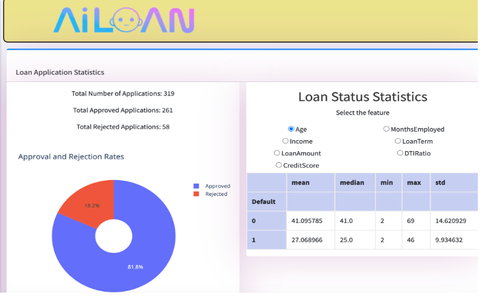
CarEShip
A remote-controlled and semi-autonomous smart delivery vehicle designed and built with Android Studio, Firebase, Arduino, and SmartCar platform, the system includes a dual-interface mobile app for pharmacists and customers to manage and track medicine deliveries. GitHub repo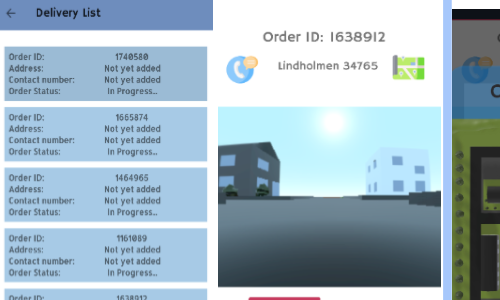
Dentistimo
A microservice distributed dentist booking system for users in Gothenburg. GitHub repo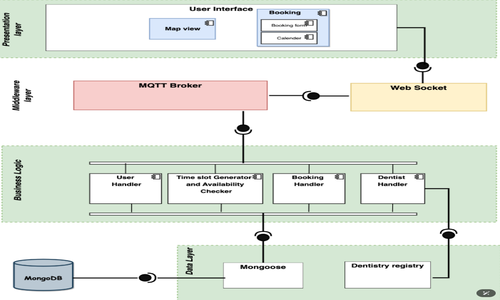
Jobster
A job-matching platform for freelancers and companies. Freelancers can create profiles, upload resumes, and apply for jobs. Companies can post jobs, browse freelancer profiles, and manage applications. The site offers tailored dashboards for each user type, with functionality for job search, profile customization, and applicant tracking. GitHub repo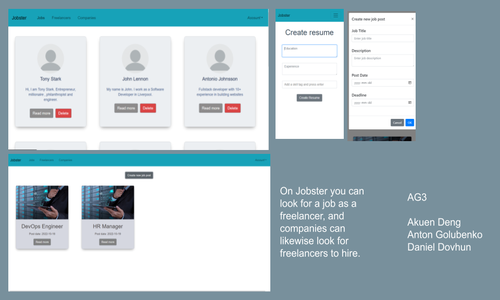
Virtual Diabetes Clinic Triage - MLOPS
A FastAPI-based service that loads a scikit-learn regression model to predict diabetes disease progression, exposes REST endpoints for health checks and scoring, and renders a triage dashboard that orders sample patient records by their predicted risk to support clinical decision-making. MLOPs, docker, deployment, CI/CD pipeline. GitHub repo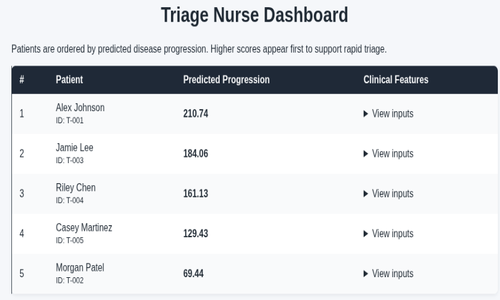
Modular exponentiation quantum algorithm
In this project we implemented Modular exponentiation from scratch using qiskit quantum circuits. GitHub repo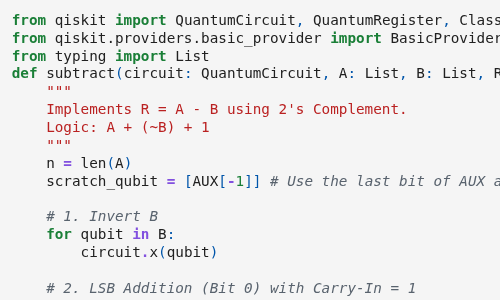
REAP-Adaptive AI Task Partitioning and Offloading Framework
An adaptive AI task partitioning and offloading framework for distributed DNN inference across Raspberry Pi, laptop, and GPU desktop nodes, optimizing energy consumption and latency in a heterogeneous end-edge-cloud environment. GitHub repo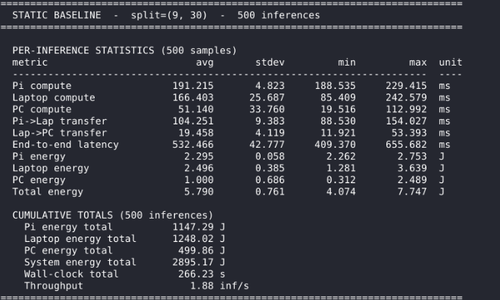
publications
Enhancing a Deep Learning Camera-Based Approach for Heart Rate Detection in Vehicles Using Non-Functional Requirements
Published in , 2024
This bachelor’s thesis investigates how non-functional requirements can be used to evaluate and enhance a deep learning model for contactless heart-rate detection in vehicles. Using the PhysNet convolutional neural network, the study focuses on explainability, robustness, and reliability, and evaluates the model through architecture analysis, feature-map visualization, hyperparameter tuning, cross-validation, and noise-intensive testing. The results highlight the importance of assessing machine-learning systems beyond accuracy and demonstrate the trade-offs between noise reduction, generalizability, and model performance.
Recommended citation: A. Golubenko and A. A. Deng, “Enhancing a deep learning camera-based approach for heart rate detection in vehicles using non-functional requirements,” B.Sc. thesis, Dept. Comput. Sci. Eng., Univ. Gothenburg and Chalmers Univ. Technol., Gothenburg, Sweden, 2024.
Download Paper | Download Slides
Gamers’ Information Security Risks Awareness and their Actual Online Behavior
Published in , 2025
This exploratory study examines the relationship between gamers’ awareness of information-security threats and their actual behaviour in online gaming communities. Using an online questionnaire and semi-structured interviews, the research investigated gamers’ experiences with phishing, account theft, authentication practices, credential sharing, and other security risks. The findings suggest that gamers with greater security knowledge tend to show more concern and caution, while previous experience with attacks improves their ability to identify and respond to similar threats. However, even knowledgeable participants engaged in risky practices, such as sharing account credentials with trusted friends or family, demonstrating that awareness does not always result in secure behaviour.
Recommended citation: A. A. Deng and E. Butkus, “Gamers’ information security risks awareness and their actual online behavior: An exploratory study of the relationship between gamers’ understanding of information security risks and their actual online behavior within gaming communities,” Dept. Comput. Syst. Sci., Stockholm Univ., Stockholm, Sweden, 2025.
Download Paper
Adaptive AI Task Partitioning and Safe Offloading in Heterogeneous Edge-Cloud Continuum
Published in , 2026
This paper presents an adaptive framework for dynamically partitioning DNN inference across heterogeneous edge, fog, and cloud devices. Evaluated on a physical testbed using VGG16, AlexNet, and MobileNetV2, the framework reduced energy consumption by 27.09–35.82% and end-to-end latency by 6.34–22.92% compared with static partitioning. The work was based on our masters thesis and was submitted and accepted in the 21st International Conference on Availability, Reliability and Security (ARES 2026) Workshop on Security, Availability, and Fault-Tolerance in Edge AI Systems, held August 24 – 27, 2026 in Linköping, Sweden.
Recommended citation: Deng, A. A., Butkus, E., Lapkovskis, A., & Donta, P. K. (2026). Adaptive DNN Partitioning and Offloading in Heterogeneous Edge-Cloud Continuum. arXiv preprint arXiv:2605.09623.
Download Paper
Adaptive AI Task Partitioning and Offloading in Heterogeneous Edge-Cloud Networks
Published in , 2026
This master’s thesis presents REAP, a runtime energy-aware framework for dynamically partitioning and offloading deep neural network inference across heterogeneous edge, fog, and cloud devices. The framework profiles computation and network conditions, evaluates possible model split points, and periodically adapts the execution strategy based on latency, communication overhead, and energy consumption. Evaluated on a physical three-node testbed using VGG-16, AlexNet, and MobileNetV2, REAP reduced total energy consumption by up to 35.82% and end-to-end latency by up to 22.92% compared with static partitioning.
Recommended citation: A. A. Deng and E. Butkus, “Adaptive AI task partitioning and offloading in heterogeneous edge-cloud networks: REAP—Runtime Energy-Aware Adaptive Partitioning and Offloading Framework,” M.Sc. thesis, Dept. Comput. Syst. Sci., Stockholm Univ., Stockholm, Sweden, 2026.
Download Paper | Download Slides
talks
Talk 1 on Relevant Topic in Your Field
Published:
This is a description of your talk, which is a markdown file that can be all markdown-ified like any other post. Yay markdown!
Conference Proceeding talk 3 on Relevant Topic in Your Field
Published:
This is a description of your conference proceedings talk, note the different field in type. You can put anything in this field.
teaching
Teaching assistant
Undergraduate courses, University of Gothenburg, Department of Computer Science & Engineering, 2022
Guided student project groups through planning, collaboration, and implementation, providing technical support and coaching in the courses below:
- Systems Development (DIT113)
- Team Programming (DIT094)